
Last updated on March 10, 2026
Wrinkles are a natural part of facial ageing, but not all wrinkles form in the same way. Some appear only when you move your face, while others remain visible even when the face is at rest. Understanding the different types of wrinkles and their causes is an important first step in deciding how to treat them.
Rather than thinking about wrinkles as a single concern, it is more helpful to look at how and why they develop. Different wrinkle types behave differently, respond to different approaches and progress at different rates over time.
Why Identifying the Type of Wrinkle Matters
Wrinkles form due to a combination of muscle movement, changes in skin structure and gradual loss of collagen and elasticity. Treating the surface of the skin alone may not be effective if the wrinkle is caused by repeated muscle activity, just as reducing muscle movement will not address wrinkles caused by thinning skin or structural changes.
By identifying the type of wrinkle, treatment can be better aligned with the underlying cause rather than simply the visible line. This distinction is important when considering why certain approaches work well for some wrinkles but not for others.
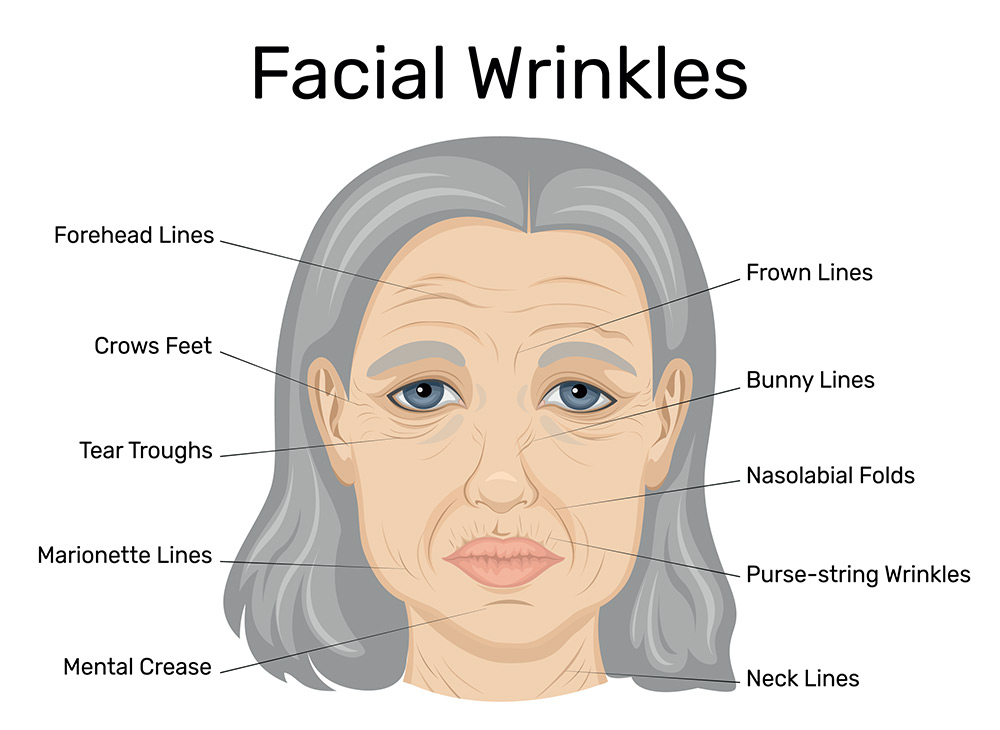
Understanding the different types of wrinkles helps explain why some lines appear with facial movement while others remain visible at rest.
What Causes Wrinkles in the First Place?
Most wrinkles develop as a result of several overlapping factors rather than a single cause. Over time, the skin gradually produces less collagen and elastin, making it less able to maintain a smooth surface. Repeated facial movement contributes to the formation of expression lines, while cumulative sun exposure and environmental stress affect skin quality and texture.
Genetics and individual skin characteristics also influence how and where wrinkles appear. How these factors combine determines whether wrinkles appear with movement, remain visible at rest, or affect skin texture over time.
Dynamic Wrinkles (Movement-Related Lines)
Dynamic wrinkles are lines that appear when the face moves and are often less noticeable when the face is at rest. Common examples include forehead lines, frown lines between the eyebrows and crow’s feet around the eyes.
What Causes Dynamic Wrinkles?
Dynamic wrinkles develop primarily as a result of repeated muscle contraction beneath the skin. Over time, the skin is folded along the same lines again and again, and as elasticity reduces, these lines begin to linger for longer after facial movement.
- Repeated contraction of specific facial muscles
- Reduced skin elasticity limiting the skin’s ability to rebound
- Expression lines becoming more noticeable with age
How Dynamic Wrinkles Are Commonly Treated
Because dynamic wrinkles are driven by muscle activity, treatment often focuses on reducing excessive movement in targeted areas. Wrinkle relaxing injections are commonly used for this purpose, as they temporarily reduce muscle contraction, allowing the overlying skin to rest and soften in appearance.
Static Wrinkles (Visible at Rest)
Static wrinkles are lines that remain visible even when the face is relaxed. These include nasolabial folds, marionette lines and deeper facial creases that have become established over time.
What Causes Static Wrinkles?
Static wrinkles tend to develop as a result of gradual structural and skin changes rather than movement alone. As collagen levels decline and facial support changes, the skin becomes less able to maintain a smooth surface.
- Loss of collagen and skin elasticity
- Gradual changes in facial volume and support
- Long-standing dynamic wrinkles becoming permanently etched
- Reduced skin thickness over time
How Static Wrinkles Are Commonly Treated
Treatment for static wrinkles often focuses on restoring support within the skin rather than altering muscle movement. Dermal fillers may be used in certain cases to help support areas affected by volume loss, with the aim of softening deeper lines while maintaining natural facial movement.
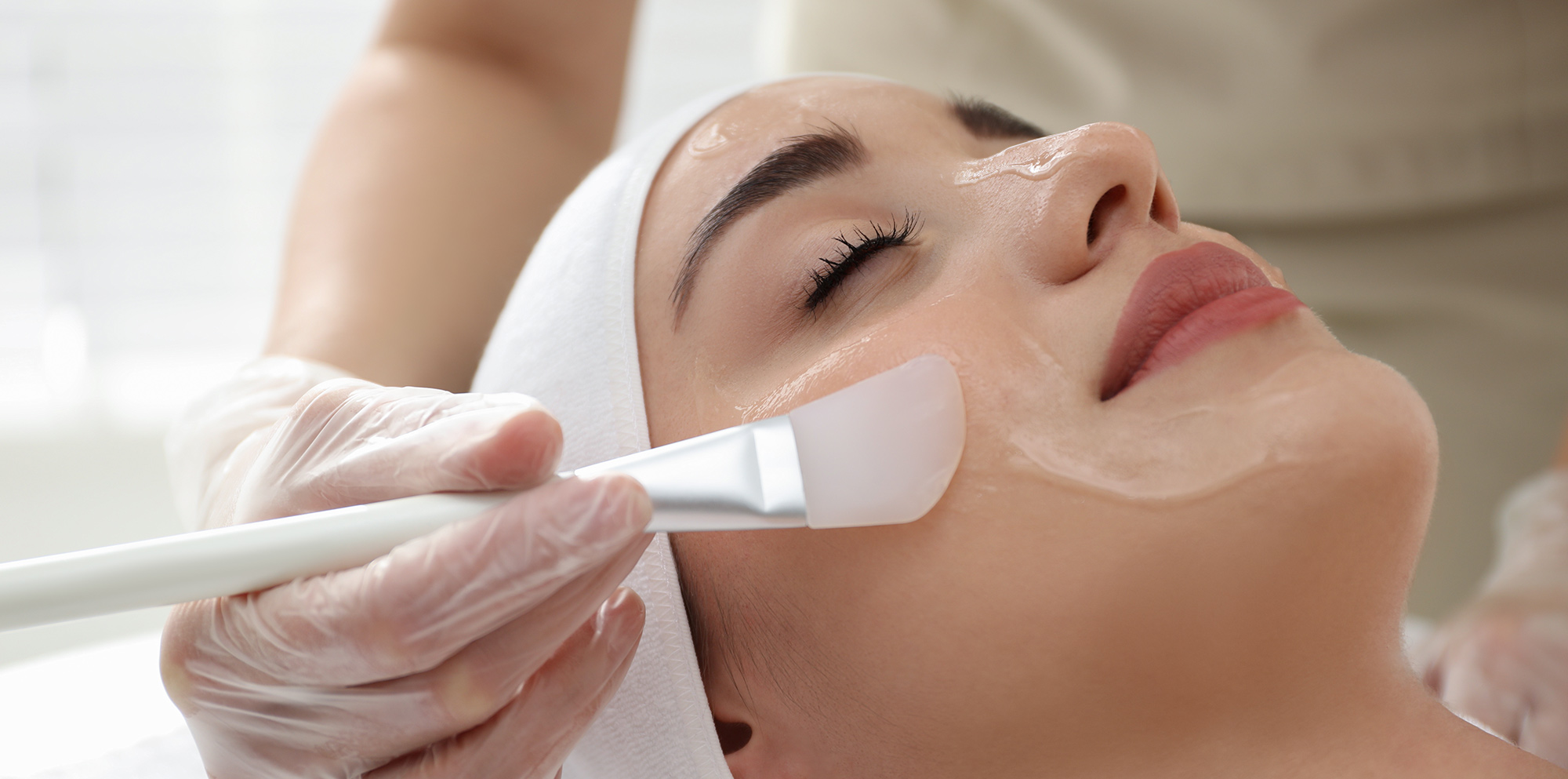
Different types of wrinkles form in different areas of the face depending on movement patterns and skin quality.
Fine Lines and Surface-Level Wrinkles
Fine lines are shallower wrinkles that affect the surface of the skin and are more closely linked to changes in skin texture than to facial structure. They are commonly seen around the eyes and mouth and can give the skin a crepey or finely lined appearance, particularly in certain lighting or when the skin is dehydrated.
What Causes Fine Lines?
Fine lines tend to develop as the skin gradually becomes thinner and less efficient at renewing itself. Unlike deeper wrinkles, they are less influenced by muscle movement and more closely related to skin quality and environmental exposure over time.
- Thinning of the skin as collagen levels decline
- Slower cell turnover reducing skin smoothness
- Cumulative sun exposure affecting surface texture
- Reduced natural hydration within the skin
How Fine Lines Are Commonly Treated
Surface-level wrinkles are often addressed using treatments that support skin renewal and improve texture. Chemical peels are one approach that may be used in this context, as they promote controlled exfoliation and regeneration of the upper layers of the skin.
PCA peels are commonly used for early or superficial fine lines, where uneven texture and dullness are contributing factors. TCA skin peels are often considered for more established surface wrinkles, as they work slightly deeper within the skin and can address more pronounced texture changes. The choice of peel depends on the depth of the lines and the overall condition of the skin.
Can Wrinkles Be Prevented or Slowed?
While wrinkles are a natural part of ageing, their development can often be influenced. Consistent sun protection, a structured skincare routine and managing repetitive facial movements may help slow the progression of certain wrinkle types. Addressing early changes in skin quality can also play a role in preventing fine lines from becoming more deeply established.
Final Thoughts
Wrinkles vary widely in their cause, depth and behaviour. Understanding the different types of wrinkles helps explain why a single approach is unlikely to suit everyone and why treatment decisions should be based on the underlying cause rather than appearance alone.
At British Face Clinic, wrinkle assessment focuses on how the skin moves, how it changes at rest, and how skin quality contributes to visible lines over time. This type-led approach supports more measured, appropriate treatment planning, whether concerns relate to dynamic wrinkles, static lines, or surface-level skin changes.
Ready to Take the Next Step?
Ready to enhance your look and boost your confidence? Schedule a free initial phone consultation with one of our specialists. Discuss your goals, receive personalised advice and explore the best options to achieve natural, long-lasting results.
FAQs
What are the different types of wrinkles?
Wrinkles are commonly grouped into dynamic wrinkles, which appear with facial movement, static wrinkles, which remain visible at rest and fine lines, which affect the surface texture of the skin. Each type forms for different reasons and behaves differently over time.
What causes different types of wrinkles to form?
Different types of wrinkles are caused by a combination of muscle movement, changes in skin structure, collagen loss and environmental exposure. The way these factors interact determines whether wrinkles appear with expression, become etched into the skin, or affect overall skin texture.
What is the difference between dynamic and static wrinkles?
Dynamic wrinkles are linked to repeated facial movement and are most noticeable during expression, while static wrinkles remain visible even when the face is relaxed. Over time, long-standing dynamic wrinkles can become static as skin elasticity reduces.
Are fine lines the same as deep wrinkles?
Fine lines are usually shallower and related to skin texture and surface quality, whereas deep wrinkles tend to involve structural changes within the skin. Because of this, fine lines and deeper wrinkles are often approached differently when treatment is being considered.
Are all wrinkles treated in the same way?
No, wrinkles are not all treated in the same way because they form for different reasons. Effective treatment planning depends on identifying whether wrinkles are caused primarily by muscle movement, volume changes, or surface skin quality.

About The Author
Mr Mrinal Supriya
Mr Mrinal Supriya is the Divisional Director of Surgery. He is highly experienced Head and Neck Surgeon, specialising in facial cosmetic surgery. He is the clinical director for head and neck service in Northamptonshire and works as an ENT Consultant. He is the lead head and neck robotic surgeon at the University hospital of Northamptonshire (2023). Previously, he held the post of ENT, Head and Neck consultant at St.George’s University Hospital, London and at Ninewells University Hospital, Dundee.



 Online Marketing For Doctors