
Last updated on March 10, 2026
Wanting a smaller nose is one of the most common aesthetic concerns, but it is also one of the most misunderstood. For many people, the issue is not simply size, but how the nose sits in proportion to the rest of the face. A nose may feel too prominent because of its width, height, length, or projection rather than its overall dimensions.
Understanding how to get a smaller nose starts with knowing what can genuinely be changed, what only alters appearance temporarily and why lasting reduction depends on nasal structure rather than surface-level fixes.
Understanding What “Smaller” Actually Means
When people say they want a smaller nose, they are rarely asking for the same thing. For some, it is a high or prominent bridge that draws attention. For others, it may be a wide nasal base, a rounded or bulky tip, or a nose that projects too far from the face.
In clinical terms, “smaller” usually refers to reducing prominence or improving proportion, not simply shrinking the nose. This distinction matters because different features contribute to how large a nose appears, and each requires a different approach. Without understanding which part of the nose is responsible, it is impossible to talk meaningfully about reduction.
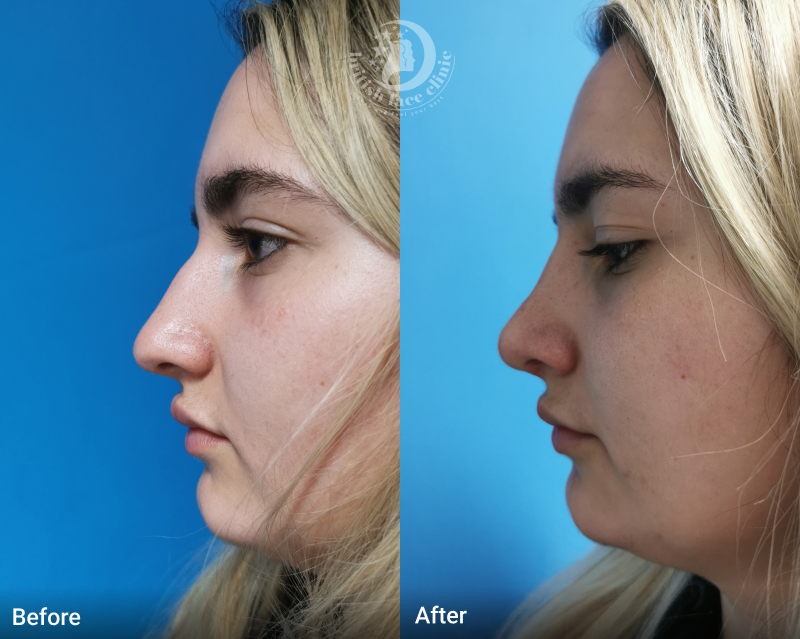
Understanding how to get a smaller nose starts with identifying whether width, height, length, or projection is creating prominence.
Can You Really Make Your Nose Smaller?
Yes, but only in specific circumstances. There is a crucial difference between making a nose look smaller and physically reducing its size. Many non-surgical approaches rely on visual balance or illusion, but they do not change the underlying anatomy. The nose is primarily made up of bone and cartilage, and these structures determine its true size.
If the goal is permanent reduction, those structures must be reshaped. This is why many people searching for how to reduce nose size are disappointed by methods that promise change without addressing anatomy.
Does Non-Surgical Rhinoplasty Make the Nose Smaller?
Non-surgical rhinoplasty is often misunderstood by people looking for a smaller nose. This treatment uses injectable products to smooth bumps, straighten the bridge, or improve symmetry. While it can change proportions, it does not remove tissue or reduce the physical size of the nose.
As volume is added rather than removed, the nose may even appear slightly larger from certain angles. For this reason, non-surgical rhinoplasty is not a solution for those wanting to make their nose smaller. It is a reshaping technique, not a size-reducing one.
Why Surgery Is the Only Way to Physically Reduce Nose Size
When someone wants to genuinely make their nose smaller, surgery is the only approach that can achieve this. Rhinoplasty allows controlled reduction of bone and cartilage. This may involve lowering the nasal bridge, narrowing the nasal bones, refining the tip, or adjusting projection so the nose sits more harmoniously within the face.
Each change is planned carefully to maintain balance and structural stability. This is why rhinoplasty for a smaller nose is not a one-size-fits-all procedure. The aim is not to make the nose as small as possible, but to reduce the features that create disproportion while preserving a natural result.

Rhinoplasty is the only option that physically reshapes bone and cartilage for those looking to reduce the size of their nose.
What Surgeons Evaluate When Someone Wants a Smaller Nose
Before discussing surgical techniques, surgeons focus on understanding the structure of the nose and what is driving the concern. This assessment ensures that any reduction is appropriate, balanced and achievable.
Key factors that are assessed include:
- Which part of the nose appears large, such as the bridge, width, tip, or nostrils
- Whether size is determined mainly by bone, cartilage, or a combination of both
- Skin thickness and the strength of underlying support
- How the nose relates to overall facial proportions
How Rhinoplasty Is Used to Reduce Nose Size
Rhinoplasty allows surgeons to address the specific structural elements that contribute to nose size. Depending on the anatomy, this may involve reducing bridge height, narrowing the nasal bones, refining cartilage in the tip, or adjusting projection so the nose appears less dominant.
Rather than focusing on a single change, rhinoplasty looks at the nose as a whole. This approach helps ensure that reducing size in one area does not create an imbalance elsewhere. As a result, smaller nose surgery is planned around proportion and longevity rather than short-term appearance.
Which Surgical Approaches May Be Used for Size Reduction
Different surgical approaches may be used depending on how much access and visibility are required during reshaping. Open and closed rhinoplasty refer to how the surgeon accesses the nasal framework. Closed rhinoplasty avoids an external incision and may be suitable for more limited adjustments, while open rhinoplasty provides greater visibility for complex structural changes.
In cases where nasal width is the primary concern, alar base reduction may be considered. This targeted technique focuses on reducing flaring at the nostrils and is used selectively rather than routinely.
Final Thoughts on Making the Nose Smaller
Making the nose smaller is not about choosing a named procedure or following trends. It is about understanding nasal anatomy, identifying what creates disproportion and selecting an approach that can safely and realistically address those features.
While many methods claim to reduce nose size, only surgical reshaping can create a permanent change. At British Face Clinic, we focus on helping patients understand what is realistically possible through careful assessment, using anatomy and proportion to guide decisions rather than generic promises.
Ready to Take the Next Step?
Ready to enhance your look and boost your confidence? Schedule a free initial phone consultation with one of our specialists. Discuss your goals, receive personalised advice and explore the best options to achieve natural, long-lasting results.
FAQs
Is it possible to make your nose smaller without surgery?
It is possible to make a nose appear smaller using make-up or visual balance techniques, but these approaches do not change the structure of the nose. Permanent size reduction requires reshaping bone or cartilage, which cannot be achieved without surgery.
Does non-surgical rhinoplasty make your nose smaller?
Non-surgical rhinoplasty reshapes the nose by adding volume to improve balance or smooth contours rather than removing tissue. As a result, it does not physically reduce nose size and may increase projection in some cases.
What is the only way to permanently make your nose smaller?
The only way to permanently reduce nose size is through surgical rhinoplasty, which allows controlled reshaping of bone and cartilage. This approach addresses the structural features that determine nasal size and proportion.
What part of the nose makes it look large?
A nose may appear large due to a prominent bridge, wide nasal bones, a bulky tip, flared nostrils, or excessive projection from the face. Identifying which feature contributes most to prominence is essential before considering reduction.
Can rhinoplasty reduce nose width or length?
Rhinoplasty can be used to narrow the nasal bones, refine the tip, or reduce projection and length where appropriate. Any reduction is planned around facial balance rather than simply making the nose smaller overall.

About The Author
Mr Mrinal Supriya
Mr Mrinal Supriya is the Divisional Director of Surgery. He is highly experienced Head and Neck Surgeon, specialising in facial cosmetic surgery. He is the clinical director for head and neck service in Northamptonshire and works as an ENT Consultant. He is the lead head and neck robotic surgeon at the University hospital of Northamptonshire (2023). Previously, he held the post of ENT, Head and Neck consultant at St.George’s University Hospital, London and at Ninewells University Hospital, Dundee.



 Online Marketing For Doctors