


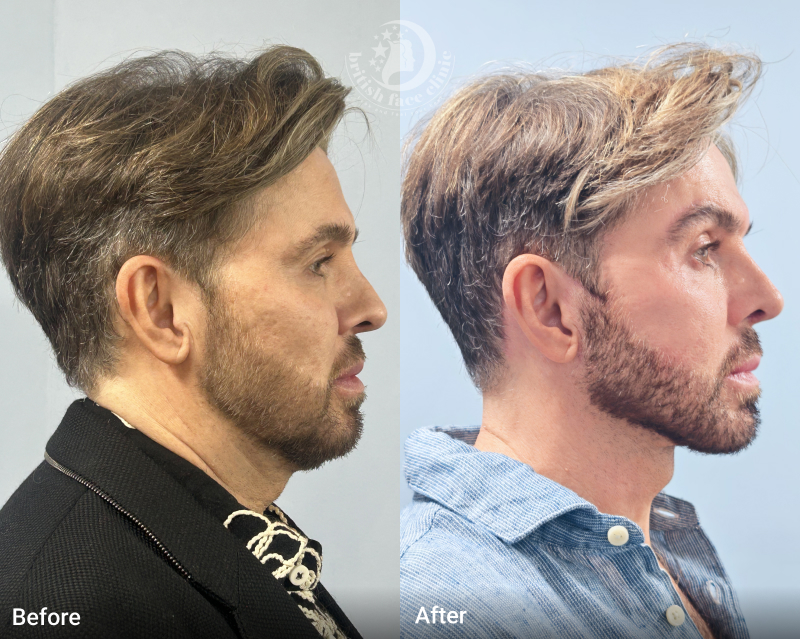
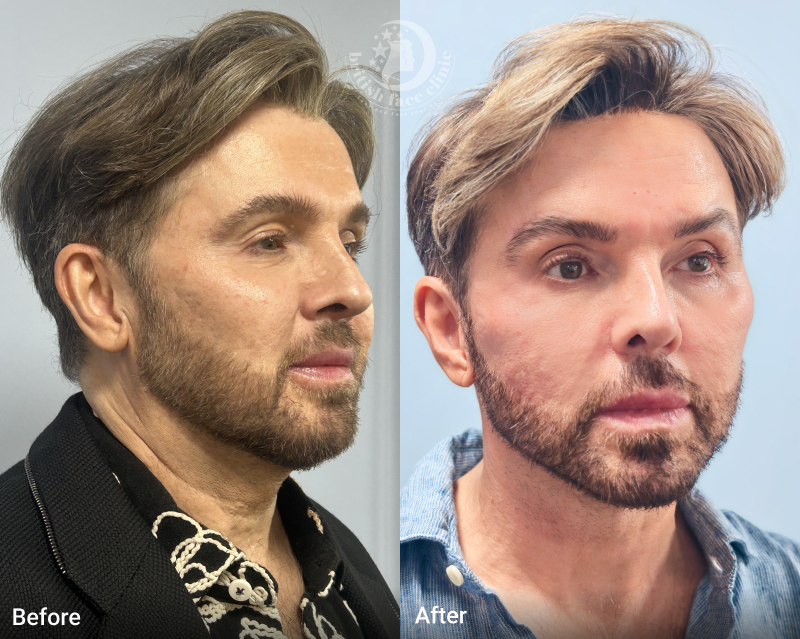
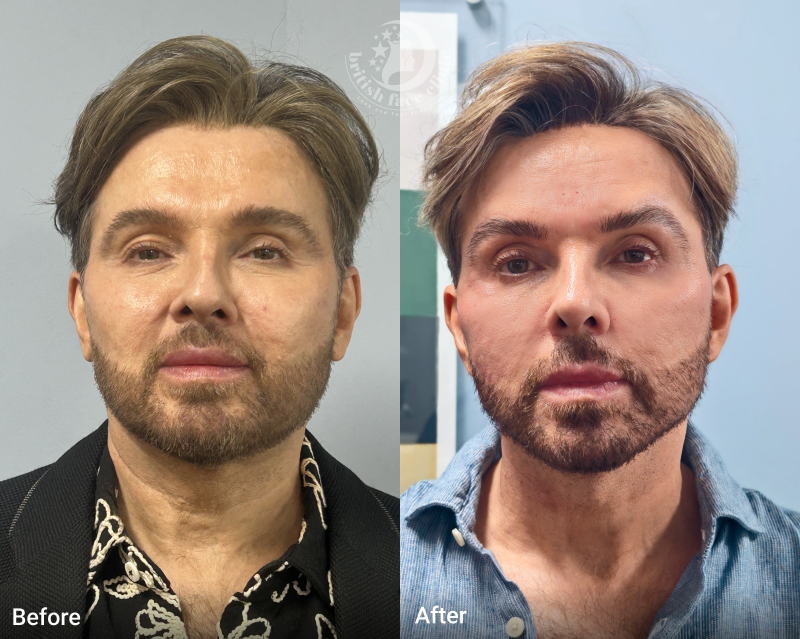
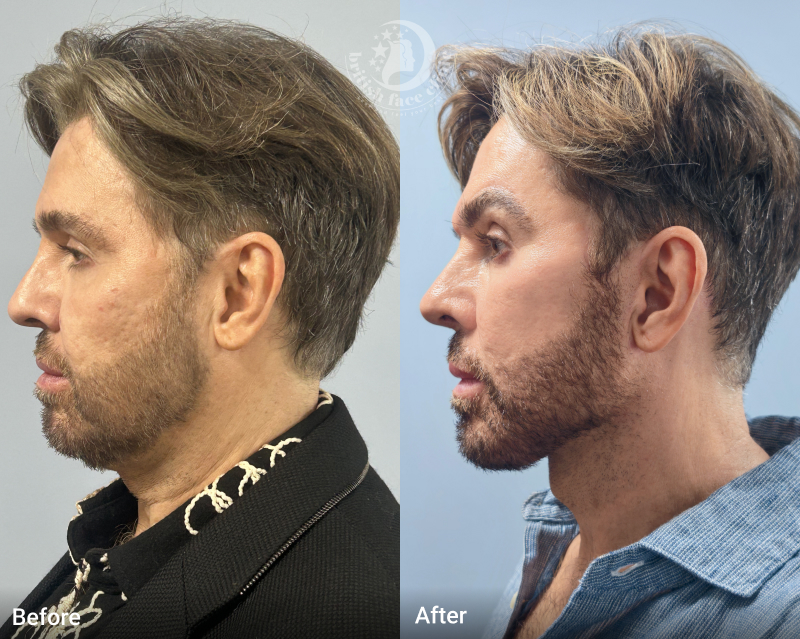


Lift the jawline, cheeks and neck, and look refreshed, not different. Performed personally by Consultant Head & Neck Surgeon Mr Mrinal Supriya FRCS.
Consultations in London (Harley Street), Milton Keynes and Northampton

5.0
Doctify 4.91 from 65 reviews
This content has been medically reviewed by Mr Mrinal Supriya (GMC 6066456) FRCS (OTOL-HNS), MRCS Ed, DO-HNS, MS (ENT), MBBS.
A deep plane facelift with neck lift takes 5–6 hours under general anaesthesia or twilight sedation, usually with a one-night hospital stay. Most patients need 2–3 weeks before returning to normal social and work activities, and can return to exercise after 3–4 weeks. Most notice a clear improvement within the first few weeks, while the result continues to refine over 12–18 months.
5–6 hours
General anaesthesia or twilight sedation, with a consultant anaesthetist
Headband for 1–2 days
Compression garment 1 week
One night for comprehensive surgery; day case for more limited surgery
2–3 weeks before returning to normal social and professional activities
Gradual return from 2–4 weeks; strenuous exercise after 3–4 weeks
Clear improvement within the first few weeks. Most swelling settled by 2–3 months. Final result at 12–18 months
How long results last: Several years. A facelift turns back the clock but doesn’t stop natural ageing.
Our philosophy: restore, never transform. Our goal isn’t to make you look different or younger than everyone else. It is to restore the face you recognise, so friends notice you look fresher and well rested without being able to say why.
Who is a Good Candidate for a Deep Plane Facelift? Learn from Mr Mrinal Supriya
These photographs show results achieved by Mr Mrinal Supriya using deep plane facelift techniques tailored to each patient’s anatomy, ageing pattern and goals. All are British Face Clinic patients and have not been digitally altered. Individual results vary according to facial anatomy, skin quality, healing and the procedures performed.
A deep plane facelift is an advanced facial rejuvenation procedure designed to restore a more youthful, refreshed appearance without an unnatural or over-tightened look.
As we age, the deeper structures of the face gradually descend, leading to jowls, loss of jawline definition, facial heaviness and changes in the neck. Rather than simply tightening the skin, a deep plane facelift releases the deep anchoring ligaments and repositions the deeper tissues (the SMAS and platysma) to restore natural facial contours.
Performed by Mr Mrinal Supriya, the procedure can improve:
Mr Supriya’s preferred approach is a composite deep plane face and neck lift with the BFC Triple Lock™. Because the skin stays attached to the underlying tissues wherever possible, blood supply to the facelift flap is better preserved, which supports healing and lets the face be repositioned as a single anatomical unit.
After deep plane mobilisation, the Triple Lock uses three complementary levels of deep tissue fixation to support the cheek, jowl and jawline, rather than relying on skin tension. The aim is stable repositioning, defined contours and a result that looks refreshed rather than surgically altered.
Every face is different, so the extent of surgery and fixation is tailored to your anatomy, tissue quality, degree of ageing and goals. As with any facelift, healing and longevity vary between individuals, and no particular result or duration can be guaranteed.
After release of the tethering deep ligaments, the deeper structures of the face and neck are lifted and repositioned, so the face is refreshed without a tight or operated appearance.
Keeping the skin connected to the deeper tissues supports blood supply and healing.
The deeper structures are repositioned and stabilised with the Triple Lock technique, rather than tightening the skin alone, to restore the contours of the cheeks, jawline and neck.
The mid-face, jawline, jowls and neck can be treated in a single procedure for a balanced result.
Fat grafting, neck contouring and brow rejuvenation are added only where appropriate.
A deep plane facelift may be suitable if you have developed jowls, loss of jawline definition, sagging of the cheeks, or loose skin around the face and neck that can’t be adequately improved with non-surgical treatments or a more limited procedure.
Most patients are in their 40s to 70s, but age alone does not determine suitability. The procedure can also suit younger patients who have developed significant facial or neck laxity, for example after significant weight loss.
It may not be right for you if:
Your suitability is decided at consultation, based on your anatomy, skin and tissue quality, general health, goals and expectations.
Not sure which facelift you need? See Which facelift do I need? or compare with the mini deep plane facelift.
Facelift techniques are not all the same. The key difference lies in which tissues are lifted and where the tension is placed.
In traditional facelifts, the skin is lifted separately from the deeper support structures, and the SMAS may be tightened with stitches or partly removed. While effective for selected patients, these techniques may have a more limited effect on the jawline, mid-face and deeper tissues.
In a composite deep plane facelift, the skin and SMAS are lifted together as a single unit and the retaining ligaments are carefully released in key areas. This lets the deeper tissues be repositioned more naturally, supported by the Triple Lock technique rather than by skin tension.
| TRADITIONAL SKIN LIFT | SMAS FACELIFT | DEEP PLANE COMPOSITE FACELIFT |
|---|---|---|
| Primarily lifts the skin | Skin and deeper tissues treated separately; limited lift because the retaining ligaments stay in place | Skin and deeper tissues repositioned together after release of the retaining ligaments |
| Limited effect on the mid-face | Moderate improvement in facial contours | Comprehensive rejuvenation of the cheeks, jawline and neck |
| More tension on the skin | Tension shared between skin and SMAS | Tension on the deeper structures rather than the skin |
| Can improve skin folds | Can improve facial contours | Restores facial contours and jawline while keeping a natural appearance |
Deep plane facelift techniques can vary significantly between surgeons. During your consultation, Mr Supriya explains exactly which structures will be treated and why.
Mr Mrinal Supriya | Consultant ENT, Head & Neck and Facial Cosmetic Surgeon
Mr Supriya is a Consultant ENT and Head & Neck Surgeon whose private aesthetic practice is dedicated to facelift and rhinoplasty surgery and related facial procedures. He is one of a small number of surgeons certified by the Royal College of Surgeons of England in facial cosmetic surgery, and a member of the European Academy of Facial Plastic Surgery (EAFPS). Rather than offering a wide range of cosmetic procedures, he concentrates on a small number of complex facial operations.
He was Chief of Surgery Division (2024–2026) and, before that, Clinical Director for head and neck surgery at Northampton General Hospital and Kettering General Hospital. He leads complex ENT and head and neck services for the NHS, including facial aesthetics and reconstruction and head and neck robotic surgery, and teaches Oxford Deanery surgical trainees.
He completed Higher Surgical Training in the UK, a clinical fellowship in Melbourne, Australia, and the AHNS clinical fellowship in Michigan, USA, and trained with Dr Andrew Jacono in New York. Mr Supriya performs every procedure himself, from your first consultation through surgery to your final follow-up.
Why Mr Supriya is different
A deep plane facelift at British Face Clinic starts from £18,000 at our Milton Keynes clinic (Athena Surgical Centre). Surgery in London starts from £20,700 and in Northampton from £19,800, reflecting the different hospital charges. Same surgeon, same technique, same aftercare at every location.
Following your consultation, Mr Supriya will give you a personalised treatment plan and a fixed quotation. There are no hidden fees or unexpected invoices during your recovery. 0% interest finance is available for the first 12 months, subject to approval.
For a full breakdown of deep plane facelift costs, what is included in your deep plane facelift, combined procedures and what affects the price, see our Deep plane facelift cost guide. For pricing across all our procedures, see Our prices.
Your consultation is an opportunity to discuss what you would like to achieve, understand your options, and decide whether surgery is right for you. We will discuss:
Mr Supriya will:
A deep plane facelift usually takes around 5–6 hours. It is performed under general anaesthesia or twilight sedation, with a consultant anaesthetist looking after you, and an overnight hospital stay so you can be monitored and supported through your first night. Surgery takes place at The Wellington Hospital in London, Athena Surgical Centre in Milton Keynes or The Three Shires Hospital in Northampton. It is recommended to have someone by your side for the first week after the surgery.
Most patients need 2–3 weeks to recover before returning to normal social and professional activities, and can return to exercise after 3–4 weeks. You’ll usually stay one night in hospital and wear a compression garment for the first week. Swelling settles gradually: most of it has gone by 2–3 months, and the result continues to refine for several months after that.
| WHEN | WHAT USUALLY HAPPENS |
|---|---|
| Day of surgery | Deep plane facelift performed under general anaesthesia or twilight sedation. Most patients stay one night in hospital for comfort and observation. |
| 1 day after | Review by Mr Supriya for bandage removal and wound check. |
| Days 1–14 | Compression garment worn as directed to support healing and reduce swelling. |
| Weeks 2–3 | Most patients feel comfortable returning to desk-based work, driving, social activities, hair appointments and light everyday routines. |
| Weeks 2–4 | Gradual return to exercise, social engagements and physical activity. |
| 4–6 weeks | Review appointment with Mr Supriya. Most visible swelling has settled and facial contours appear increasingly refined. |
| 2–3 months | The majority of swelling has resolved and your rejuvenated appearance becomes more apparent. |
| 3–6 months | In-clinic visit with Mr Supriya. Continued refinement as healing completes and scars mature. |
| 9 months | In-clinic visit with Mr Supriya. |
| 12 months | In-clinic appointment with Mr Supriya to review your result. |
Throughout your recovery you have direct access to your dedicated British Face Clinic team member to discuss your healing or any questions.
Your care continues long after surgery. Your aftercare programme includes a post-operative recovery package, scheduled follow-up with Mr Supriya and the clinical team, regular reviews to monitor healing, and long-term follow-up for reassurance. From your first consultation to your final review, you stay under the care of the same consultant-led team.
Any facelift involves incisions and therefore permanent scars. In a deep plane facelift, the incisions are carefully placed within the hairline and the natural contours around the ear, where they are designed to heal discreetly and become harder to see over time.
Because the deep plane technique repositions the deeper tissues rather than relying on skin tension, the skin can often be closed more naturally, which may help scars heal as fine lines. Scars are most noticeable in the first months and soften as they mature over 3–6 months and beyond. Scar quality varies between individuals and can’t be guaranteed.
Mr Supriya will discuss scar placement during your consultation and explain what you can realistically expect. Interested in techniques that minimise visible scarring? Ask whether an endoscopic access facelift may be suitable for you.
“Having a deep plane facelift has changed my life, now I look how I feel” – Clara, deep plane facelift patient. Read Clara’s story
“I finally feel like myself again” – Sylvia, deep plane facelift and neck lift patient. Read Sylvia’s story
Discover Why Suzie Chose Mr Mrinal Supriya For Her Facelift
Discover Sarah’s Transformative Journey: A Patient’s Perspective
on Deep Plane Facelift and Neck Lift Procedures
Anne, Deep Plane Facelift and Neck Lift Patient,
Shares a Once-in-a-Lifetime Facelift Experience
Discover Sarah’s Transformative Journey: A Patient’s Perspective
on Deep Plane Facelift and Neck Lift Procedures
Before deciding, many patients want to hear from someone who has been through it. We can arrange a confidential conversation with a previous deep plane facelift patient of Mr Supriya. Ask what matters to you: what the consultation was like, how recovery compared with what they expected, how long swelling lasted, and how they feel about their results now. No sales pitch, no obligation, no scripted answers.
Every face ages differently. Depending on your anatomy and goals, Mr Supriya may adapt your deep plane facelift, combine it with another procedure, or recommend a more suitable option.
For many patients, the neck ages before the face. A deep plane neck lift repositions the platysma muscle, corrects neck bands and, where appropriate, removes excess fat beneath the platysma and contours the deeper layers of the upper neck. Because treating the face without the neck can look unbalanced, the two are often performed together. Find out more about the deep plane neck lift.
A more limited lift of the cheeks and jawline, for earlier signs of ageing. Find out more about the mini deep plane facelift.
For selected patients with early to moderate ageing, mid-face descent or brow heaviness, and without much excess skin, deeper tissues can be repositioned through small incisions hidden in the hair-bearing scalp, usually without incisions around the ears. It relies on repositioning rather than skin removal and is often combined with an endoscopic brow lift and fat grafting. Suitability can only be decided at consultation. Learn more about the endoscopic facelift.
Men often develop heavier jowls, loss of jawline definition and neck laxity, while wanting to keep strong masculine features. A male facelift restores definition to the jawline and neck while preserving masculine proportions, with particular care over beard-bearing skin, hairline position and scar placement.
Whether weight loss has come from lifestyle changes, bariatric surgery or medication, losing facial fat can reveal loose neck skin, jowls and hollow cheeks. Lifting alone is not always enough, so many patients benefit from a deep plane facelift combined with neck contouring and facial fat grafting, restoring both support and volume.
Not every facelift delivers the result a patient hoped for. Mr Supriya also performs revision facelift surgery to correct previous procedures, which often needs careful planning, scar management, restoration of volume and treatment of remaining neck laxity.
Like any surgery, a deep plane facelift carries risks, including bleeding or haematoma, infection, wound-healing problems, visible scarring, numbness, hairline changes, asymmetry, prolonged swelling, and temporary or, rarely, permanent facial nerve weakness. General anaesthesia also carries its own risks, and results can vary or occasionally need further treatment.
Mr Supriya will go through your individual risks, the alternatives and the option of no surgery at consultation and as part of consent, giving you time to decide. His NHS work includes complex head and neck cancer surgery involving the facial nerve.
Mr Supriya consults and operates at three locations, and patients travel to see him from across the UK and abroad.
Travelling from abroad? Our team can help with virtual consultations, treatment planning, travel and accommodation recommendations, and planning your follow-up. Harley Street consultations and direct rail links to London’s airports make treatment straightforward for international patients.
To discuss a deep plane facelift, call us on 020 4634 0507, book online, schedule a video consultation, or visit one of our clinics in London, Milton Keynes or Northampton. Your first phone call is free. A full consultation with Mr Supriya costs £250.
A deep plane facelift is an advanced facelift technique that lifts the skin and deeper facial tissues together, after carefully releasing key retaining ligaments. This lets the descended tissues of the cheeks, jawline and lower face be repositioned rather than relying on tension on the skin. The aim is natural-looking rejuvenation that preserves normal facial expression.
Both address the deeper SMAS layer rather than just tightening the skin. In many SMAS facelifts, the skin is lifted separately and the SMAS is tightened or folded. In a deep plane facelift, the skin and SMAS are lifted together, usually over a larger area, with release of the retaining ligaments so the deeper tissues can be repositioned. The right technique depends on your anatomy, degree of ageing and goals.
It is designed to. Because the deeper tissues are repositioned and the tension sits on them rather than on the skin, a deep plane facelift aims to avoid a pulled or tight look. That said, how natural any facelift looks also depends on the surgeon’s skill, your anatomy and healing, and a well-performed SMAS lift can look natural in selected patients.
At British Face Clinic, a deep plane facelift costs from £18,000 at our Milton Keynes clinic, all-inclusive. This covers the surgeon, anaesthetist, theatre and hospital costs, medication, garment and follow-up. You’ll receive an exact quotation after your consultation. See our deep plane facelift cost guide.
It depends on your concerns and goals. For people with jowls, a softer jawline and neck laxity, a deep plane facelift can give a long-lasting improvement that non-surgical treatments can’t. It is also a significant investment and an operation with a 2–3 week recovery, so your consultation is the place to weigh the likely benefit against the cost, risks and alternatives, including no surgery.
Most patients should allow 2–3 weeks before returning to normal social and professional activities, although recovery varies. Swelling, bruising, tightness and temporary asymmetry are expected early on and take several weeks to settle. You’ll usually stay one night in hospital, wear a supportive garment in the early weeks, and return gradually to strenuous exercise over the following weeks.
Most patients can take a short-haul flight around 2–4 weeks after a deep plane facelift, and a long-haul flight after 4–6 weeks, once Mr Supriya has reviewed you. A long operation and early swelling both raise the risk of blood clots, so flying too soon isn’t advised. If you’re travelling from abroad, plan to stay in the UK until your early follow-up appointments are complete.
A deep plane facelift is designed to give long-lasting rejuvenation, but it doesn’t stop natural ageing. How your result changes over time depends on your anatomy, genetics, skin quality, lifestyle, weight changes and sun exposure. It’s best to think of a facelift as turning back the clock rather than stopping it, rather than attaching a guaranteed number of years.
We don’t promise a number of years. The aim of a deep plane facelift is to help you look fresher, more rested and like yourself, rather than to look a particular age or like a different person. Mr Supriya will explain what is realistically achievable for your face at consultation and show you results of patients with similar features.
At British Face Clinic, we use the Triple Lock approach to give secure, multi-level support to the lifted tissues. Rather than relying on the skin to hold the result, the deeper tissues are repositioned and stabilised at three complementary levels of fixation. The Triple Lock is part of how the deeper tissues are secured during surgery, not a separate operation, and it is tailored to each patient.
Yes. All facelift surgery leaves permanent scars, but the incisions are placed around the ear and, where appropriate, within or along the hairline to make them as inconspicuous as possible. Scars are usually more noticeable in the early months and soften and fade with time. Final scar quality varies, and occasionally scars stay visible or need further treatment.
Facelift scars are most visible in the first few months. They usually soften and fade as they mature over 3–6 months, and continue to improve after that. How quickly they fade depends on your skin type, healing and aftercare. Mr Supriya will review your scars at your follow-up appointments and advise on scar care.
A deep plane facelift may suit you if you have descent of the cheeks, jowls, loss of jawline definition or other changes that non-surgical treatments or a more limited procedure can’t adequately address. Suitability depends more on your anatomy, degree of ageing, general health and goals than on age, so both younger and older patients can be suitable.
There is no single best age. Most patients are in their 40s to 70s, but the right time depends on how your face and neck have aged, your skin quality, your general health and your goals. Younger patients with early descent or significant laxity after weight loss can also be suitable. Your consultation will help you decide whether now is the right time.
A mini deep plane facelift is a more limited procedure for earlier changes in the cheeks, jawline and lower face. A full deep plane facelift gives more extensive repositioning and can be combined with other procedures. At British Face Clinic, the mini deep plane facelift costs from £16,000 and the full deep plane facelift from £18,000 at Milton Keynes.
A facelift can improve the jawline and upper neck, but patients with more significant neck ageing may benefit from combining it with a deep plane neck lift. Neck surgery can address loose skin, platysmal bands and excess volume beneath the chin and jawline. Mr Supriya assesses the face and neck together and will explain whether neck surgery is likely to improve your result.
Yes. Depending on your anatomy and goals, a deep plane facelift can be combined with a neck lift, eyelid surgery, brow lift, lip lift or facial fat grafting. Mr Supriya will discuss whether additional procedures are likely to add meaningful benefit, and how combining them affects surgical time, recovery, risks and cost.
All surgery carries risks. These include bleeding or haematoma, infection, delayed wound healing, scarring, altered sensation, hairline changes, asymmetry, skin healing problems and anaesthetic complications. Temporary weakness of branches of the facial nerve can occur; permanent weakness is uncommon but possible. Your individual risks are discussed in detail at consultation and as part of the consent process.
That is the aim. A deep plane facelift repositions descended tissues while preserving natural proportions and expression, rather than creating a tight or “operated” look. Swelling, tightness, altered sensation and temporary asymmetry are normal early on, so your appearance in the first few months isn’t the final result. Movement and appearance become increasingly natural as the tissues settle.
A deep plane facelift with neck lift usually takes around 5–6 hours, depending on the extent of surgery. It is usually performed under general anaesthesia, with a consultant anaesthetist looking after you throughout, and most patients stay in hospital overnight. Surgery takes place at The Wellington Hospital in London, Athena Surgical Centre in Milton Keynes or The Three Shires Hospital in Northampton.
Most patients don’t need revision surgery, but no cosmetic operation can guarantee a particular result or perfect symmetry. Occasionally, further treatment may be appropriate because of healing, scarring, asymmetry or a remaining concern. Careful assessment, realistic expectations and enough time for healing are important before deciding whether any further treatment is right.
Look for a surgeon on the GMC Specialist Register with recognised training in facial surgery, membership of relevant professional bodies and regular experience of facelift and neck lift surgery. Ask to see before & after results of their own patients, and check who will personally perform your surgery and aftercare. At British Face Clinic, Mr Supriya performs every operation himself.
Mr Mrinal Supriya personally performs every deep plane facelift at British Face Clinic and oversees your care from consultation through surgery and follow-up. He is a consultant ENT and head and neck surgeon specialising in facial cosmetic surgery, holds Royal College of Surgeons certification in facial cosmetic surgery, and trained with Dr Andrew Jacono in New York. GMC number: 6066456.
Your consultation is about deciding which operation, if any, is right for your face. Mr Supriya will assess your face and neck, discuss your concerns and goals, and explain the options, risks, recovery and likely outcome. You’ll receive a personalised treatment plan and an exact quotation. A full consultation costs £250, and your first phone call with the clinic is free.
The Wellington Hospital, 15 – 17 Lodge Road
London NW8 7JA
(Consultations and Surgery)
23 Harley Street
London, W1G 9QN
(Consultations)
Athena Surgical Centre
16 Davy Avenue, Knowlhill
Milton Keynes, MK5 8PL
The Three Shires Hospital
The Avenue
Northampton. NN1 5DR
The Wellington Hospital
15 – 17 Lodge Road
London NW8 7JA
23 Harley Street
London, W1G 9QN
Athena Surgical Centre
16 Davy Avenue, Knowlhill
Milton Keynes, MK5 8PL
The Three Shires Hospital
The Avenue
Northampton. NN1 5DR
 Online Marketing For Doctors
Thinking about a facelift but still have questions? We offer you the chance to speak directly with a previous patient who’s undergone a Deep Plane Facelift with Mr Mrinal Supriya. Get honest, unfiltered insights about their journey—from consultation to recovery and results.
Not all facelifts are created equal. Learn why this innovative approach is praised for its natural outcomes and exceptional longevity. Download our guide about Deep Plane Facelift and take the first step toward confidence.
